
In the dynamic world of hospitality, where guest experiences are paramount and staff satisfaction directly impacts service quality, effective leadership is crucial. Today, leaders have a powerful new ally in fostering engagement across all levels: Artificial Intelligence. Far from being a futuristic concept, AI is already transforming how we connect, train, and empower our teams, from the dedicated individuals meticulously cleaning rooms to the visionary minds crafting marketing campaigns.
The resort and hospitality industry, with its diverse workforce and often demanding environment, presents unique challenges and opportunities for engagement. Let’s explore how AI, thoughtfully integrated and led, can create a more connected, efficient, and ultimately, a more human-centered workplace.
1. Personalizing Training and Development: The AI Learning Coach
One of the most significant hurdles in a diverse workforce is providing relevant and engaging training. A “one-size-fits-all” approach often falls short, especially for roles with varying skill sets and learning styles.
- For Housekeeping & Front-Line Staff: AI-powered learning platforms can deliver bite-sized, interactive training modules directly to their preferred devices. Imagine a short video demonstrating a new cleaning technique, followed by a quick quiz, all delivered in multiple languages. AI can track individual progress, identify areas where an associate might be struggling, and recommend personalized additional resources. This can be particularly impactful for new hires, providing consistent onboarding regardless of the trainer.
- For Supervisors & Mid-Management: AI can recommend leadership development courses based on performance reviews and team feedback. It can even simulate challenging management scenarios, allowing supervisors to practice their decision-making in a safe environment.
- For Marketing & Sales Teams: AI can analyze market trends and guest feedback to suggest relevant upskilling in areas like digital marketing, social media engagement, or data analytics. It can even provide real-time feedback on marketing campaign drafts.
Leadership’s Role: Leaders must champion these platforms, ensuring accessibility, allocating dedicated learning time, and celebrating individual and team achievements. It’s about demonstrating that investing in personal growth is a core value.
2. Streamlining Communication and Feedback: The Intelligent Hub
Effective communication is the lifeblood of any successful operation. AI can cut through the noise and ensure vital information reaches the right people, while also creating accessible channels for feedback.
- For All Associates: AI-driven communication platforms can translate messages in real-time, bridging language barriers often present in diverse hospitality teams. Urgent announcements, such as a last-minute change in event setup or a VIP guest arrival, can be pushed to specific departments or individuals. Chatbots can answer frequently asked questions about company policies, benefits, or schedules, freeing up HR and management for more complex issues.
- For Leaders: AI can analyze sentiment from employee feedback (anonymous surveys, suggestion boxes) to identify recurring themes or emerging concerns, providing actionable insights for improving workplace culture and addressing issues before they escalate. It can also help identify communication bottlenecks.
Leadership’s Role: Leaders need to model transparent communication and actively solicit feedback through these AI-enhanced channels. Critically, they must demonstrate that feedback is heard and acted upon, building trust and demonstrating that every voice matters.
3. Optimizing Workflows and Reducing Tedium: The AI Assistant
Many roles in hospitality involve repetitive tasks that, while essential, can lead to burnout and disengagement. AI can automate or assist with these, freeing up employees to focus on higher-value, more rewarding aspects of their jobs – particularly guest interaction.
- For Housekeeping & Maintenance: AI can optimize cleaning schedules based on occupancy rates, guest preferences, and predicted check-out times, reducing wasted effort and ensuring rooms are ready efficiently. Predictive maintenance AI can alert staff to potential equipment failures before they occur, preventing disruptions and improving safety.
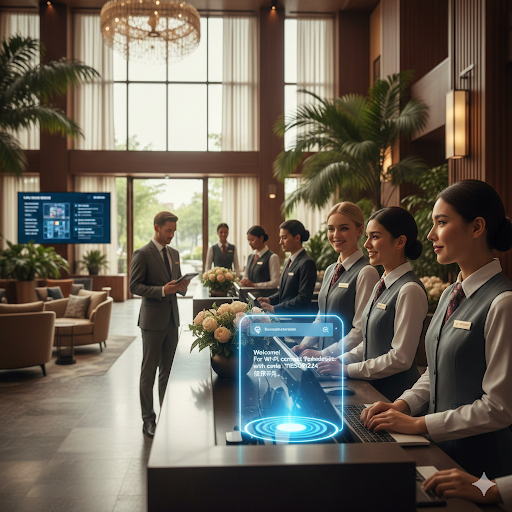
- For Front Desk & Concierge: AI chatbots can handle routine guest inquiries (Wi-Fi password, restaurant hours, local attractions), allowing front-line staff to focus on personalized service and complex guest requests. This empowers staff to become true “experience creators” rather than information providers.
- For Marketing & Revenue Management: AI can automate data analysis, identify booking trends, personalize offers to guests, and even draft initial marketing copy, allowing teams to focus on strategic planning and creative execution.
Leadership’s Role: Leaders must clearly communicate why AI is being implemented (to support staff, not replace them), provide thorough training on new tools, and solicit feedback on how AI can be further optimized to improve daily operations. Celebrate the efficiency gains and the renewed focus on guest satisfaction.
4. Recognizing and Rewarding Performance: The Data-Driven Acknowledgment
Meaningful recognition is a powerful driver of engagement. AI can provide leaders with the data to identify and acknowledge excellent performance more consistently and objectively.
- For All Associates: AI can analyze guest reviews and internal performance metrics to highlight outstanding individual and team contributions. For example, specific mentions of a housekeeper’s attention to detail or a server’s exceptional service can be flagged for recognition.
- For Leaders: AI can help track progress towards individual and team goals, allowing for timely and specific feedback, coaching, and rewards. It can identify patterns of high performance that can be replicated across the organization.
Leadership’s Role: While AI can identify excellence, the human element of recognition remains paramount. Leaders should use AI insights to personalize acknowledgments, offer specific praise, and celebrate achievements publicly. The “thank you” should always come from a person.
The Human Touch in an AI-Powered World
It’s crucial to remember that AI is a tool, not a replacement for human leadership. Its most effective use is to augment human capabilities, free up time for meaningful interactions, and provide insights that strengthen relationships.
Effective leaders in the AI era will:
- Be Visionaries: Understand AI’s potential and proactively explore how it can serve their teams and guests.
- Be Empathic: Recognize and address any anxieties about AI, emphasizing its role in enhancing jobs, not eliminating them.
- Be Trainers: Ensure their teams are proficient in using new AI tools and understand their benefits.
- Be Connectors: Use the time saved by AI to foster deeper relationships, provide mentorship, and build a strong, positive culture.
By embracing AI with a people-first mindset, leaders in the hospitality industry can create workplaces where every associate feels valued, equipped, and engaged, ultimately leading to unparalleled guest experiences and sustained success.